
English| USD
Suggested for you
More currencies
Choose a language
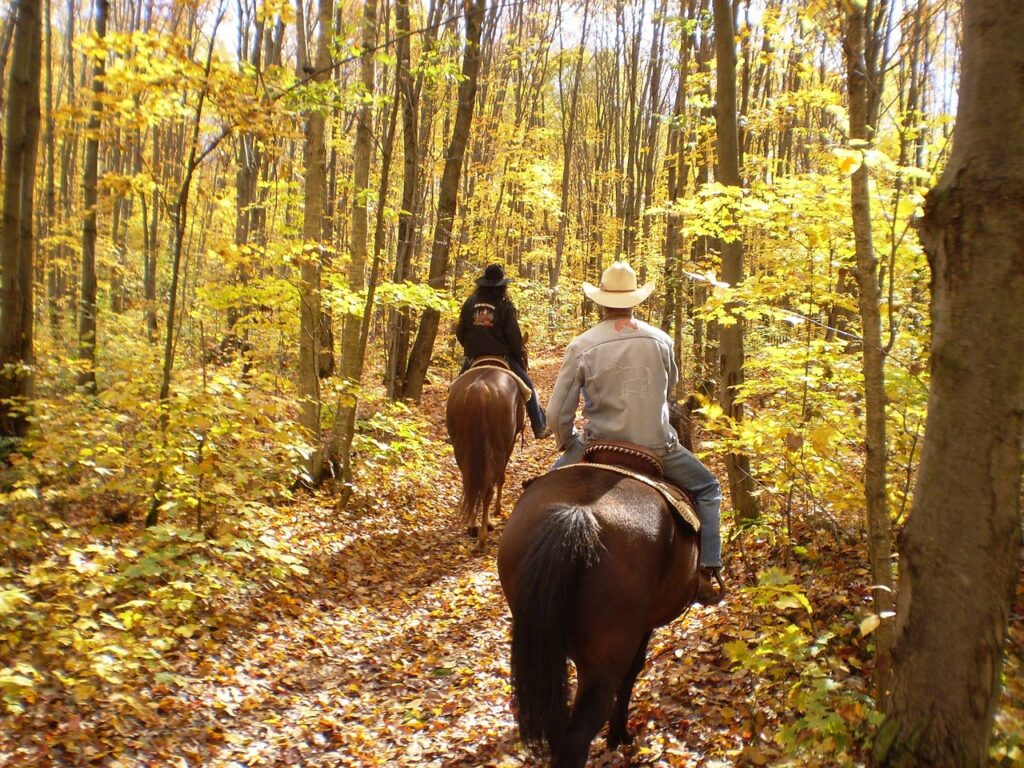
The White Mountain National Forest opens more than 1,200 miles of trail to equestrian use, but not all paths permit horses year-round. Understanding which routes welcome riders, where to park trailers, and when seasonal closures take effect determines whether your ride stays legal and low-impact.
Quick answer
White Mountain National Forest horseback riding is permitted on most hiking trails except designated wilderness areas during mud season and specific footpaths closed to stock. A daily recreation pass costs 5 USD at certain trailheads, though forest land itself requires no entrance fee. Riders must use designated equestrian parking areas with trailer access, observe Leave No Trace stock practices, and avoid trails when posted closures protect wet soil from hoof damage between April and late May.
More than 60 percent of the White Mountain National Forest trail system allows horseback access, yet riders routinely encounter confusion over which routes permit stock and which prohibit it. The forest spans 800,000 acres across New Hampshire and western Maine, encompassing everything from groomed carriage roads to technical backcountry singletrack. Federal guidelines permit horses on national forest trails unless a route is explicitly closed by signage or seasonal order, but five designated wilderness areas within the forest impose stricter limits during spring thaw. Equestrian regulations in White Mountain National Forest horseback riding focus on soil protection and multi-use safety. Mud season closures typically run from early April through late May, varying by elevation and drainage. Trails above 2,500 feet may stay restricted into June if snowmelt persists. The Forest Service posts closure notices at trailheads and updates conditions weekly during transition periods. Riders who ignore seasonal restrictions risk citation and contribute to erosion that can close trails permanently. Outside restricted windows, most loop systems and connector paths remain open, including portions of the Kilkenny Ridge Trail, the Cherry Mountain Trail, and lower sections of the Presidential Range approach routes. Trailer parking requires advance planning. Only a dozen trailheads in the forest offer pull-through or back-in spaces long enough for horse trailers, and summer weekends fill these lots by mid-morning. The Sawyer River Road corridor and the Bear Notch Road area provide the most reliable equestrian access, with gravel lots designed for stock trailers and stock water sources nearby. Standard passenger-vehicle trailheads lack the turning radius and space for safe trailer maneuvering. The Forest Service publishes an equestrian trailhead map that marks approved parking zones, but the document is updated infrequently and some lots lose capacity when trees fall or erosion narrows the shoulder. Permitted trail networks favor riders willing to navigate by topographic map rather than blazed corridor. Many of the forest's most rideable routes follow old logging roads and fire access tracks that appear on USGS quads but lack formal trail names or maintenance schedules. Cross-referencing the Motor Vehicle Use Map with the wilderness boundary layer reveals legal riding corridors that see fewer than a dozen parties per season. The trade-off is self-sufficiency: no trail signs, no groomed tread, and no cell signal if a horse goes lame or weather turns.
“Federal guidelines permit horses on national forest trails unless a route is explicitly closed by signage or seasonal order.”
The most favorable period for horseback riding in White Mountain National Forest occurs from late June through early October. During these months, trails are typically free of mud and snow, providing stable conditions for equestrians.
Muddy trails, cool 50-65°F. Expect seasonal closures due to trail saturation.
Warm 70-85°F. Drier conditions allow for broader trail access.
Cool 45-65°F. Optimal riding weather before the first snow accumulation.
Cold below 30°F. Significant snow cover restricts most equestrian trail use.
Verdict: The best time to ride is Tuesday to Thursday, arriving during the 08:00–17:00 window, between July and September.
White Mountain National Forest is accessible via primary transit corridors in New Hampshire, with the administrative headquarters located at 71 White Mountain Drive, Campton, NH 03223. Visitors traveling with horses should approach via I-93 to reach regional trailheads.
I-93 North to Exit 28
Route 3/US-3 North to Campton
Concord Coach Lines to Plymouth, NH
For equestrian access, the best arrival window is 08:00–17:00 to avoid peak parking congestion and maximize daylight for trail access. Ensure you utilize designated trailhead parking areas equipped for horse trailers to secure sufficient space.
Access to White Mountain National Forest land is free of charge. Certain trailheads require a daily recreation pass for vehicle parking.
Verdict: A typical visitor pays 5 USD for a daily recreation pass, provided they are parking at a site that requires one.
White Mountain National Forest is open daily for equestrian access. While the forest remains accessible throughout the week, visitors should plan their arrival within the recommended daylight window.
Forest Service regulations and trail etiquette protect the wilderness experience for all users. Responsible horseback riding ensures trail sustainability and safe multi-use access.
Everything you need to know about white mountain national forest horseback riding
Yes, equestrians are welcome on many designated forest trails throughout the region. Visitors should consult official forest service maps to identify specific routes open to pack animals.
You can find suitable paths by reviewing the official forest service website for multi-use trail designations. Many of these routes are well-maintained for diverse recreational activities.
While general forest entry is free, you may need a daily recreation pass at specific trailheads. The current fee for these passes is 5 USD per day.
The best arrival window is 08:00–17:00 to ensure you have sufficient daylight and to avoid peak parking congestion. Arriving early helps secure a spot in areas designated for horse trailers.
All riders must follow Leave No Trace principles and stay on marked paths to protect the alpine tundra and forest understory. It is essential to manage manure and ensure stock is kept away from sensitive water sources.
Horseback riding is permitted seasonally, though some trails may close due to mud or extreme conditions. Check current alerts on the forest website before planning your trip.
Yes, limited parking exists at specific trailheads capable of accommodating horse trailers. We recommend checking the official forest resource page to confirm which trailheads provide the necessary space for your vehicle.